
The Complete Guide to Expat Football in Bangkok
Everything I wish someone had told me when I moved to Bangkok and wanted to play football. Where to go, how to book, what it costs, and why the community ends up being the best part.

Everything I wish someone had told me when I moved to Bangkok and wanted to play football. Where to go, how to book, what it costs, and why the community ends up being the best part.
My name is Ludovic. I co-founded KickHub. Before that, I was the guy messaging strangers on WhatsApp trying to get into a game. This guide is what I would hand to a friend moving to Bangkok tomorrow.
How this whole thing started
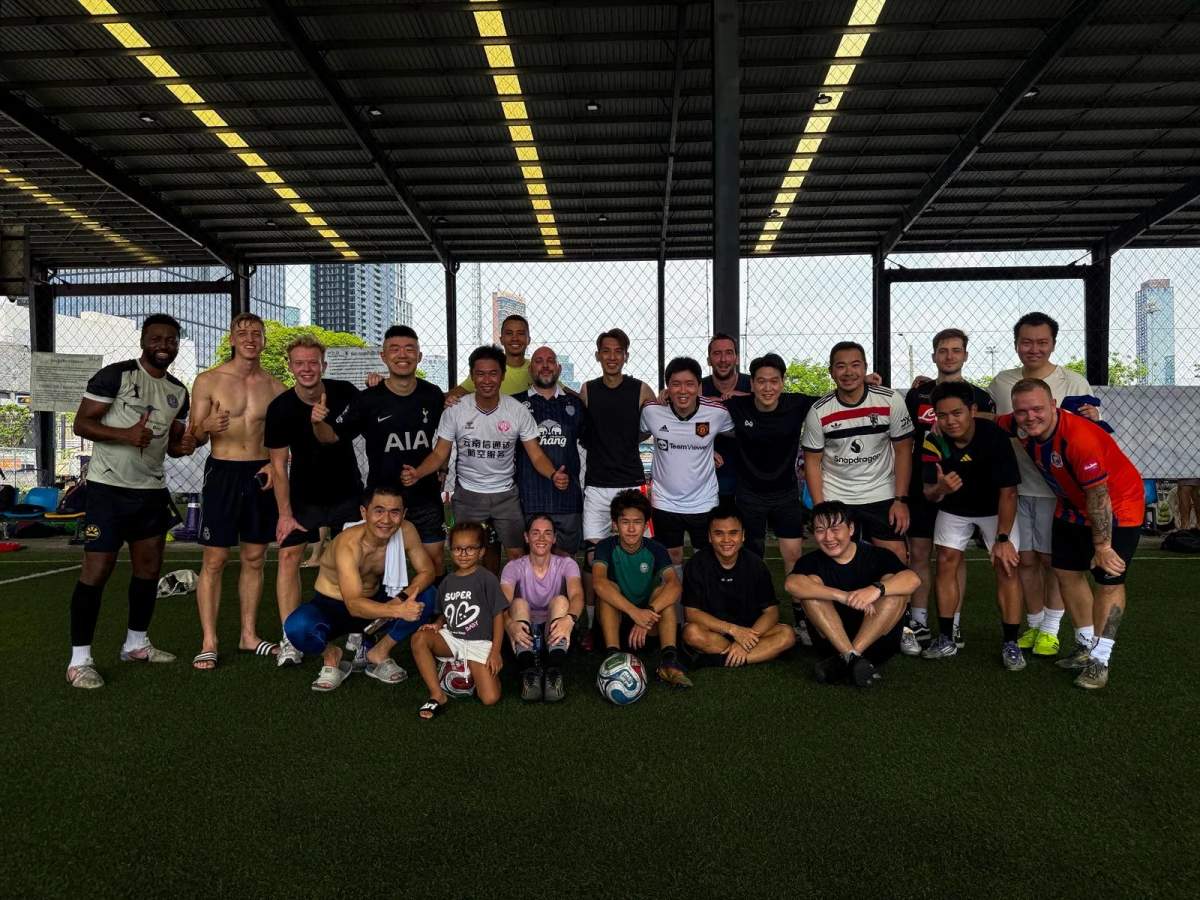
October 2025. Twelve players. One WhatsApp group. A few local Thai guys and a handful of expats who had been searching for regular football in Bangkok and coming up empty. The games existed, scattered across the city in informal circles, but nothing felt organized or reliable.
That first evening, people were genuinely happy to play. Happy to have found something. But the experience was rough. Organizing through WhatsApp meant constant back and forth. "Are you coming?" "Maybe." "Bring a friend." "He cancelled." Numbers shifted until the last minute. Some weeks we had enough players and some weeks we scrambled.
The gap was obvious. Bangkok has tens of thousands of expats who play football. The city has dozens of pitches. But connecting people to games in a way that actually worked? Nothing did that well. Forums were outdated, Facebook posts got buried, and WhatsApp groups ran on volunteer goodwill that burned out fast.
That is why KickHub exists. We turned that messy WhatsApp operation into an app where you pick a game, pay, and show up. The platform handles the rest. But before I get into how KickHub works specifically, here is the broader picture of expat football in Bangkok and how to get into it, regardless of which route you take.
The venues you need to know
Bangkok has a lot of football pitches. Most are fine. A few are great. The ones that matter for expat pickup football are concentrated in a few areas. If you want a deeper breakdown with directions and nearby transport, I wrote a full venue guide here.
POLO Football Park (Lumphini)
This is the heart of expat football in Bangkok. POLO Football Park is off Wireless Road near Lumphini Park, close to BTS Phloen Chit. Good artificial turf, solid floodlights, central location. Most KickHub games happen here, and for good reason. The crowd is international, the atmosphere is the best in the city, and the location means players from Silom, Sathon, and Sukhumvit can reach it without losing an hour in traffic.
Sunday mornings at POLO have their own energy. People play and then stick around. It has turned into a brunch thing. One player who runs a bakery in Bangkok showed up with fresh tarts for everyone after the match. No announcement, no plan. He just brought food and people gathered around and ate and talked about the game. Thursday evenings are the opposite. Competitive. Players come with their regular squads, the intensity goes up, and nobody is there for brunch. Same pitch, different universe depending on the day.
OASIS (Sathon)
A quieter venue in Sathon, south of Lumphini Park, with good turf and less congestion. OASIS works well when POLO slots are full or when you prefer a calmer setting. Same quality of game, smaller crowd, more relaxed before and after.
Grand Soccer Pro On Nut
Grand Soccer Pro On Nut extends KickHub's reach east, serving the large expat population living along lower Sukhumvit. If you live past Ekkamai on the BTS line, Soccer Pro saves you the commute to POLO.
These are the main venues right now. New ones get added as the community grows.
The app shows all current options with schedules and availability. If you commute by train and want the pitches sorted by stop, I mapped out football near BTS stations so you can pick the one closest to your line.
How to actually get into a game
If you have never played pickup football in a new city before, the process can feel unclear. I covered this step by step in how to join pickup football, but here is the short version.
Download the KickHub app at kickhub.app. Browse the schedule. Pick a game that fits your location and time. Pay. Show up 10 minutes early. Play.
That is it. No tryout. No team. No WhatsApp group to join first. No proving yourself over three weeks before someone lets you onto the pitch.
Games are 7v7, usually 60 minutes. Teams get balanced through the app. Equipment is provided. You bring boots (or trainers if you prefer turf shoes) and water. Everything else is sorted.
The simplicity is deliberate. When I was organizing games through WhatsApp, the friction was the biggest problem. People wanted to play but the process of confirming, paying, coordinating was enough to lose half the group every week. Removing that friction is the entire point of using a platform instead of a group chat. I broke down why platforms outperform informal groups if you want the full comparison.
What to expect at your first game
You will not know anyone. That is completely normal. On any given evening, a third of the players are there for their first or second time. The community absorbs newcomers fast because the format demands it. You are on a team. You communicate. You play.
Nobody expects you to be Messi. The range of skill levels in any KickHub game goes from "haven't played in years" to "played semi-professionally somewhere." The 7v7 format is forgiving. Smaller teams mean more touches, more involvement, less hiding on the wing waiting for the ball.
The culture of the games matters. I wrote about pickup football etiquette separately because it comes up a lot. The short version: play fair, rotate positions, don't argue every call, and shake hands at the end. Bangkok pickup football is physical but friendly. People come to enjoy themselves.
One story that captures this well. A Thai player named Thoï came to his first KickHub game without knowing a single person. Shy does not begin to describe it. He is a local living in Bangkok, loves football, and wanted to mix with expats. The kind of person who would walk into a networking event, stand in the corner, and leave without talking to anyone.
Since that first game, Thoï plays at least three times a week. He is now one of the most regular players in the community. His football improved. His English improved. He went from someone who barely spoke to anyone to a guy everyone knows by name. The game forced it. You cannot stay silent on a pitch. Someone asks you to press, to switch, to cover a run. You respond. The next response comes easier. Within weeks he had a full social circle built entirely through football.
That is not a rare story. It is the pattern. If you are reading this article because you moved to Bangkok recently and you are trying to figure out how to meet people, football solves it faster than coworking spaces, meetups, or bar crawls. I went deeper into this in making friends through football as an expat.
The community behind the games
This is the part nobody expects when they sign up for their first game. You think you are booking a football session. What actually happens is you end up with a social network.
KickHub has more than 4,000 registered players from over 120 nationalities. The WhatsApp community group has become its own thing. People share rides to the pitch, organize food after games, and help each other out with everything from visa advice to apartment recommendations.
The business connections happen without anyone trying. Players who run e-commerce companies have found clients through people they met on the pitch. Others made introductions that helped them launch ventures in Bangkok. Someone mentions over water bottles after the game that they need a developer, and a player two towels down says "I know someone." No LinkedIn profiles exchanged. No elevator pitches. Two people who trust each other because they have been running at each other for weeks.
This happens constantly. Football produces connections that meetups and networking events try to manufacture but rarely deliver. The game creates a shared experience. The time before kickoff and after the whistle creates natural conversation. And the repetition of seeing the same people week after week builds familiarity that turns into real relationships.
I started KickHub because I wanted to play football. The community that formed around it was not part of the original plan. It just happened because you put a diverse group of people on a pitch together twice a week and let shared experience do its thing.
Pricing and how to save
Straight numbers for Bangkok as of 2026.
A spot costs the same whether you pay by PromptPay (Thai bank transfer), card or the KickHub wallet, and late bookings cost more. The Bangkok guide has the current prices.
If you play often, the KickHub wallet saves you paying each time: top up once and book from your balance. Wallet money does not expire and you can use it on any game at any venue. If you plan to play twice a week or more, the pack pays for itself quickly.
For context, splitting a pitch rental through an informal WhatsApp group typically runs 100 to 150 THB per person. KickHub costs more because the platform handles venue booking, team balancing, equipment, and the operational overhead that group admins normally absorb for free (until they burn out). The trade-off is reliability. Games fill. Players show up. Nobody chases payments or scrambles for numbers at the last minute.
If budget is the top priority and you already have connections in the city, informal groups can work. If you are new, value your time, and want guaranteed games, the pricing reflects what you get.
The Football Academy
Beyond pickup games, KickHub runs a Football Skills Academy for adults. Coach Punn leads sessions every Friday at POLO Football Park. These are structured training focused on technical skills, positioning, and tactical awareness. Not a lecture. Actual drills, small-sided games with coaching, and feedback you can apply in your next pickup match.
Sessions run 799 to 899 THB depending on the format. The Academy serves a different need than pickup. Pickup is about playing. The Academy is about improving. Several regulars do both. They train on Friday and test what they learned in their Saturday or Sunday games.
If you played at a decent level before and you feel rusty, or if you started playing as an adult and want to develop faster, the Academy fills that gap. Coach Punn has a background in professional coaching and adapts the sessions to the group level.
Tips for newcomers arriving in Bangkok
Book your first game before you arrive. Seriously. One of the best things about a platform is that you can browse the schedule from anywhere. Pick a game for your first or second evening in the city. You will have something to do, people to meet, and an immediate connection to a community that extends beyond the pitch.
Bring turf shoes or moulded studs. Bangkok pitches are almost all artificial turf. Metal studs are not allowed at most venues and will destroy your ankles on hard surfaces anyway. If you do not own turf shoes, any decent sports shop in Bangkok sells them for 800 to 2,000 THB.
Hydrate aggressively. Bangkok is hot and humid year-round. Even evening games under floodlights can push 30 degrees with high humidity. Drink water before, during, and after. Electrolytes help. I covered playing in the heat in detail in a separate article, but the short version is: if you think you have drunk enough water, drink more.
Play the early evening slots first. Games at 7 PM or later are cooler than 5 PM kickoffs. Your body needs a couple of weeks to acclimatize to Bangkok heat if you are coming from a temperate climate. Start with later slots and work your way earlier once you adjust.
Join the WhatsApp community. After your first game, you will get an invite to the KickHub WhatsApp group. This is where the social side lives. Game recaps, post-match food plans, weekend activities, random football debates. The group is active and welcoming. Contact is +66 82 676 7493 if you want to reach out before your first game.
Do not overthink your level. Every new player worries about this. The games have beginners, intermediates, and strong players mixed together. The 7v7 format keeps everyone involved regardless of ability. Nobody cares if you miss a shot. They care if you give effort and play fair.
Beyond the pitch
Expat football in Bangkok is bigger than any single platform or group. The city has amateur leagues, 11-a-side competitions, women's football communities, and weekend tournaments scattered across the calendar. KickHub covers the pickup side of things. For everything else, Facebook groups like Bangkok Footy Casuals (4,000+ members) remain the best discovery tool.
What makes Bangkok special for football is the intersection of diversity and accessibility. Dozens of nationalities playing together in any given week. Pitches available every day across multiple neighborhoods. A cost of living that means playing three times a week does not break your budget. And a culture, both Thai and expat, that treats football as the universal connector it is.
I have watched this community grow from 12 players in a WhatsApp group to more than 4,000 registered players in about a year. People keep coming back. They bring friends. They make plans around their game nights. Some of the strongest friendships I have seen formed between people who had nothing in common except a love for football and the fact that they ended up in the same city.
That first match in October 2025 was messy and improvised and held together by good intentions. What exists now is something different. Structured, reliable, and still growing. But the feeling from that first night is the same. People showing up, happy to play, happy to be there.
If you are in Bangkok or planning to move here, book a game. The rest takes care of itself.