
Pickup Football Etiquette: Unwritten Rules Every Player Should Know
The unwritten rules of pickup football. Showing up on time, calling fouls, rotating positions, and everything nobody tells you before your first game.

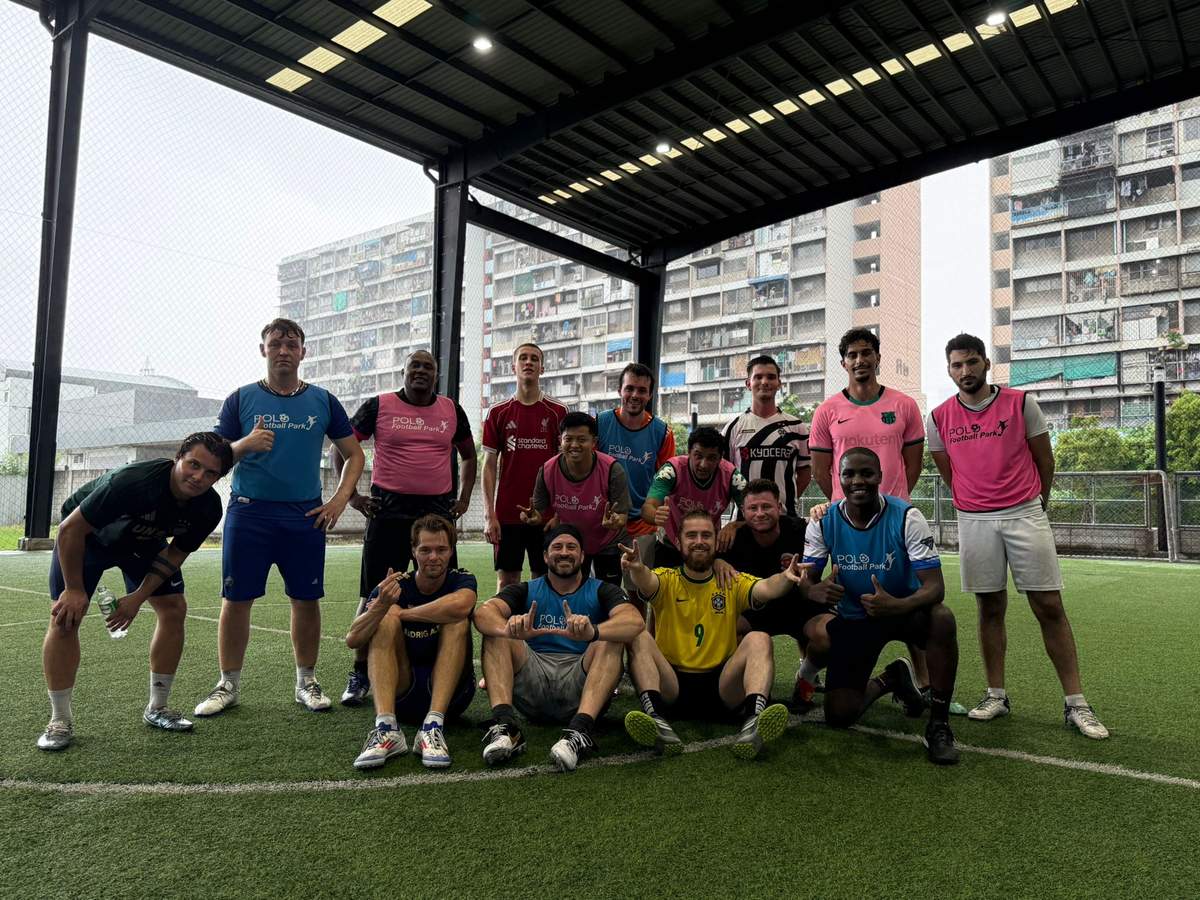
Nobody tells you the rules before your first pickup football game. You show up, get put on a team, and figure it out as you go. Most of the etiquette is invisible until someone breaks it. Then the reaction from other players makes it very clear what's acceptable and what isn't.
Show up on time or don't show up
Pickup football games start when enough players arrive. In a 7-a-side format with 60-minute slots, every minute of waiting is a minute stolen from everyone else. If 13 people are standing on a pitch at 7:02 PM waiting for the 14th player to park his motorbike, the frustration is immediate and visible.
Being 5 minutes late to a casual game feels minor. It isn't. The pitch is booked for a fixed time. Nobody is going to extend the session because you got stuck in traffic on Sukhumvit. Players who are consistently late stop getting invited. In WhatsApp groups, their name starts getting skipped when the organizer counts heads. On booking platforms, late arrivals miss the team selection and sometimes get stuck rotating on and off for the first 15 minutes while everyone else plays.
One player in the Bangkok pickup scene was notorious for arriving 10 to 15 minutes late to every Thursday session. He was talented, nobody disputed that. But the group stopped confirming his spot because the late starts were affecting everyone's experience. Being good at football doesn't buy you the right to waste other people's time.
Read the room before you play your game
Not every session has the same energy. Same pitch, same time slot, even many of the same players, and it can feel completely different depending on the day.
Sunday mornings at POLO are relaxed. The pace is slower, players chat between plays, and after the match people stick around. One Sunday, a player who runs a bakery in Bangkok brought fresh tarts for everyone and the group did an informal brunch on the benches next to the pitch. The conversation drifted from football to weekend plans to restaurant recommendations. That is the Sunday vibe.
Thursday evenings at the same venue are the opposite. People come to win. The tackles are harder, the passing is quicker, and the banter has an edge to it. If you show up on a Thursday expecting Sunday energy, you will be out of sync with the group and you will frustrate teammates who are there to compete.
You can figure this out in the first five minutes. How hard are people going in on challenges? Are players calling for the ball with urgency or just jogging into space? Is the conversation between teams friendly or pointed? Adjust accordingly. Nobody is asking you to suppress your style. Just don't be the person who slide tackles someone in a social game, or the person who stops running in a competitive one.
Losing well is not optional
Everybody loses. In pickup football, you lose roughly half your games. The teams are picked at the start of each session, often randomly or balanced by whoever is organizing. You might end up on a weaker side. You might play well and still lose because your goalkeeper had a bad night. None of this is unusual.
What people will actually remember is you walking off the pitch mid-match because you're frustrated.
This happened in Bangkok. A player was losing badly. His team was disorganized, nothing was working, and he was visibly angry about it. Instead of finishing the game and moving on, he walked off the pitch without saying a word to anyone. Just left. The game continued, his team played short, and the mood shifted from competitive to uncomfortable.
That player came back the following week. Nobody said anything directly, but the reception was noticeably cooler. People were less willing to pass to him, less willing to pick him on their team. That kind of exit breaks something that takes weeks to rebuild.
Pickup is a social game first. If you can't handle losing without it affecting how you behave on the pitch, you're going to struggle in any regular group. The people who last the longest are the ones who can laugh at a 7-1 loss and still show up the next week.
No referee, so referee yourself
There's no referee. Every call is made by the players involved. This works surprisingly well most of the time, but it requires a specific mindset.
When you foul someone, acknowledge it. Don't wait for them to appeal. Raise your hand, give the ball back, move on. The game flows faster when honesty is automatic rather than negotiated. Players who constantly dispute obvious fouls, or who never admit to handballs, become exhausting to play with. Nobody wants to argue about a throw-in during a casual Wednesday night game.
The grey areas are where it gets complicated. A 50/50 challenge where both players think they got the ball cleanly. An offside that nobody is quite sure about because there's no linesman. A goal where the ball might have crossed the line, or might not have.
The unwritten rule: give it up sometimes. You can't win every single disputed call. If you fought for the last one, concede the next one. The balance matters more than any individual decision. Players who always insist they're right, even when nobody else is sure what happened, drain the goodwill from the group fast.
Newcomers and regulars play by different rules
In informal groups organized through WhatsApp or Facebook, regulars have priority. They organized the game, booked the pitch, filled the group when nobody else would. A newcomer joining their session is a guest, and guests don't get to demand equal playing time.
I saw this play out in a WhatsApp group in Bangkok. A newer player showed up for a two-hour session and played maybe 30 minutes. The regulars rotated among themselves and he spent most of the time on the sideline watching. Nobody was rude about it, there was no confrontation. It was just the understood hierarchy: the people who built the group play more.
On a booking platform where everyone pays the same amount, the dynamic flips. If you paid 280 baht for a 60-minute game, you get equal pitch time. Rotation when there are extra players should be even, tracked informally by whoever is managing the session. Anyone who tries to skip their turn on the sideline, regardless of how long they have been playing in that group, is breaking the deal.
Knowing which system you're in matters. If you're joining a WhatsApp group for the first time, expect to rotate off more than others until you become a regular. If you booked through a platform, expect equal time and speak up politely if you're not getting it.
The small things that separate regulars from tourists
Experienced pickup players do certain things automatically that nobody will explain to you.
Bring both a dark and light shirt. Teams are often split by color. If you only have one shirt, you're the person making the team division awkward. Some players carry a reversible training bib in their bag. It takes up no space and solves the problem permanently.
Bring water but keep it off the pitch. Bottles on the sideline, not behind the goal where they get kicked over during play. Sounds trivial until you have slipped on spilled water at the edge of the box.
Say the score out loud after every goal. Pickup games have no scoreboard. The number of times I've seen arguments about whether it's 4-3 or 4-4 in the last five minutes of a game is absurd. Whoever scores should call out the updated score. If nobody does, ask. It prevents the kind of dispute that ruins the final minutes.
When extra players are rotating on and off, come off without being asked. If your group has agreed on a rotation (three goals and you swap, or every five minutes), police yourself. The player who keeps "not hearing" the call to rotate is the one nobody wants to play with.
What happens when people consistently break etiquette
Pickup football communities are self-correcting, but slowly. Nobody is going to confront someone after one incident. What happens instead is gradual exclusion. The organizer stops confirming their spot. The WhatsApp message asking if they are coming stops being sent.
In a city like Bangkok where the expat football scene is interconnected, reputation travels between groups. The player who argues every call at Soccer Pro is known at POLO. The player who walked off the pitch mid-match gets talked about in other WhatsApp groups.
It's never dramatic. People just quietly stop including you. And because nobody tells you directly, it can take weeks to realize the problem is your behavior, not scheduling conflicts or bad luck.
The players who stick around long term aren't necessarily the most skilled. They're reliable, they don't make things weird, and they put the group above themselves. Skill gets you invited once. How you behave gets you invited back.
Rotation etiquette when you have extra players
Most 7-a-side games aim for exactly 14 players. But sometimes 15 or 16 show up. When that happens, rotation becomes the most contentious part of the evening.
The fairest system is timed rotation: one player from each team sits out for a fixed period, then swaps back in. Five minutes is common. The worst system is "loser stays off," where the team that concedes a goal rotates a player. This punishes the weaker team by constantly disrupting their lineup.
In practice, what usually happens is something in between. An organizer loosely tracks who has been off and calls for swaps. This works only if everyone cooperates. The moment one player decides they shouldn't have to sit because they "just came off," the system collapses and resentment builds.
If you're the extra player, volunteer to sit first. You'll get back on quickly, and people remember who made things easy. That goodwill lasts longer than the three minutes you spend watching.
The only rule that actually matters
Pickup football works because strangers agree to trust each other for 60 minutes. You play fair, admit your fouls, rotate when asked, handle losing without drama, and show up when you say you will. All of the above comes back to one thing: don't make other people regret sharing a pitch with you.
You don't need to be the best player. You don't need to organize anything. You just need to be someone that other players are glad showed up. There's no coach, no referee, no league table. That social contract is all that holds it together. Respect it, and you will have a regular game for as long as you want one.
Want to understand the bigger picture of expat football in Bangkok? Read the complete guide. Or if you are ready, find your next game.