
Making Friends Through Football: Why Expats Choose Pickup Games
How pickup football helps expats build real friendships abroad. Why sport works better than networking events, coworking spaces, and hostel bars.

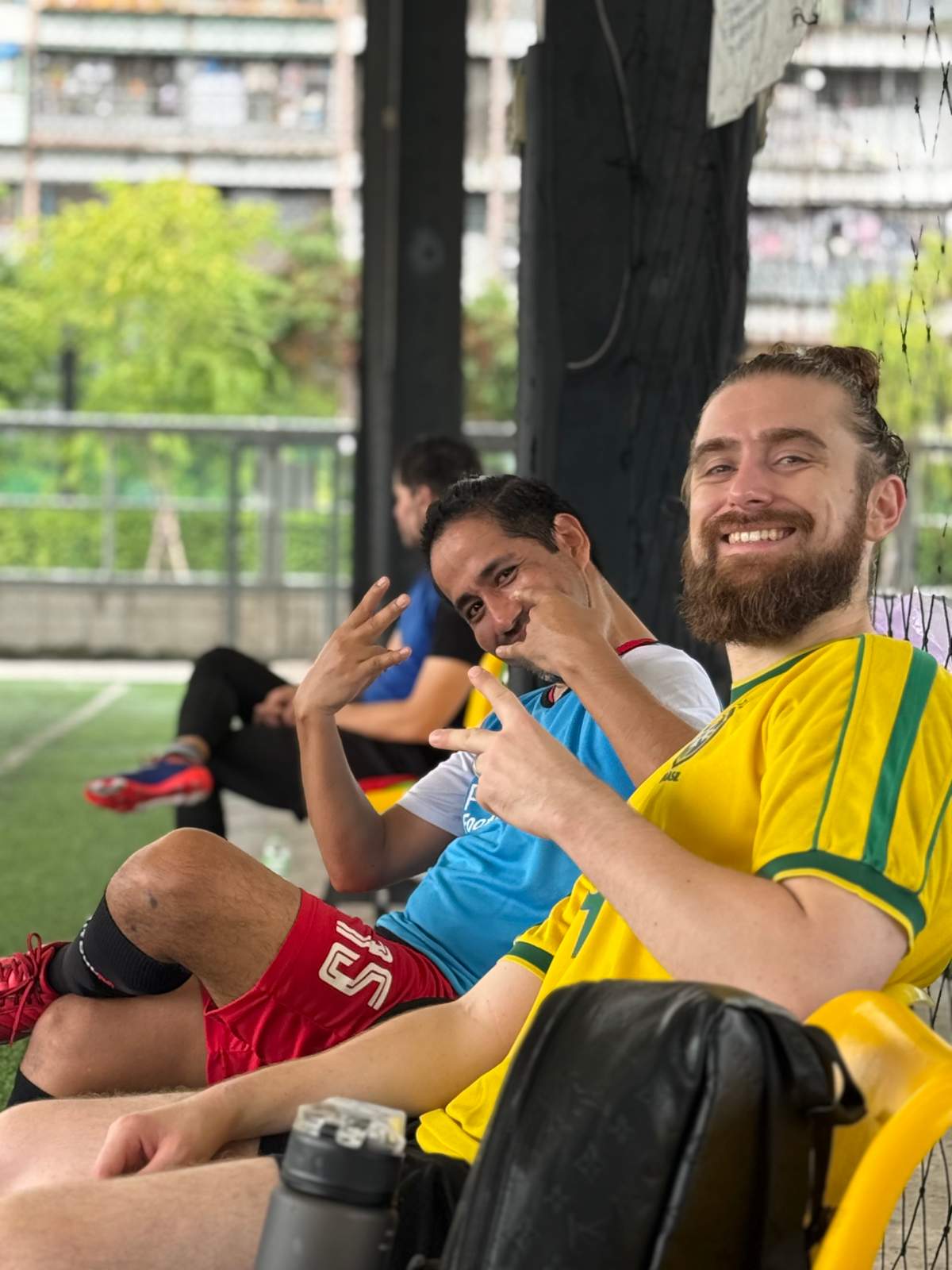
I watched a guy show up alone to a pitch in Bangkok last month. He did not know anyone. Someone passed him the ball, he passed it back, made a run, got found again. Sixty minutes later he was exchanging LINE contacts and making plans for the weekend. That is pickup football as a social tool. No small talk, no forced networking. The game does the work.
Most articles about making friends abroad tell you to join coworking spaces, hit up meetups, or hang around hostel bars. Those work to a degree. But they all require you to manufacture a reason to talk to someone. Football removes that barrier. You are already doing something together. Conversation happens because it has to, call for the ball, coordinate a press, laugh about a missed shot, and it continues once the game ends.
Why bars and meetups fall short for expats
Bangkok has no shortage of social events. Meetup.com lists dozens of expat gatherings every week. Facebook groups organise pub crawls, language exchanges, coworking days. And yet a lot of expats still describe feeling isolated after months in the city. Most social environments here are transactional or superficial by design.
A bar conversation between strangers rarely goes past surface level. You trade the same questions ("How long have you been here?" "What do you do?") and forget the person by Tuesday. A coworking space puts you near people without giving you a reason to interact. Meetups feel forced when everyone is visibly there to "network."
Football sidesteps all of this. Nobody shows up to meet people. They show up to play. But the structure of the game, the shared effort and the fact that you keep seeing the same group, produces something meetups cannot: familiarity that builds into actual friendship. You know someone's name because you shouted it asking for the ball, not because you read it on a badge.
Over 2,000 active players from more than 70 nationalities pass through Bangkok's pickup football scene. The odds of finding people you connect with are high. The average expat stays 18 months to 3 years, the player pool rotates constantly, and showing up as a new face is completely normal.
Repeated contact does what one-off events cannot
Psychologists have known for decades that proximity and repeated unplanned interactions predict friendship better than almost anything else. The gym you go to three times a week does more for your social life than any single party. Football multiplies that because you are not just in the same room. You are actively doing something together, passing, defending, arguing about whether that was offside.
Not sure what to expect on the pitch? Read the unwritten rules of pickup football before your first game. And if showing up alone feels intimidating, here is how to join even if you are nervous.
Play twice a week at the same time slots and you start seeing the same faces. You recognise them. You nod. A few weeks in, you are on the same team coordinating plays and someone suggests food after the game. It feels earned, which is why the friendships stick.
Group chats appear. People start carpooling to the pitch. A Tuesday evening game becomes the anchor of your social week without anyone consciously deciding it would be.
From shy to social: how the game forces connection
Thoï is a Thai local who came to his first game knowing nobody. Visibly shy. He wanted to mix with expats and improve his English but had no obvious way in. The kind of person who would sit silently at a meetup and leave without speaking to anyone.
Since that first match, he plays at least three times a week. His English improved fast. He went from barely speaking to anyone to being one of the most social players in the community. The game forced communication on him. You cannot stay silent on a football pitch. Someone will ask you to switch, to press, to mark a runner. You respond. The next response comes easier.
That shift from isolated newcomer to regular with a full social circle happened in weeks, not months. Shared physical activity accelerates trust. You have seen someone miss an open goal and laugh it off, or get tackled hard and come back for more. That tells you more about a person than ten coffee conversations.
Bangkok can be isolating despite its size. The language barrier alone is enough, and the transient expat community and the sheer sprawl of the city make it worse. Football gives people a recurring reason to see the same faces, doing something active, with zero social pressure. Nobody has to explain why they are there.
Business connections that happen without trying
Nobody goes to a pickup football game to network. That is exactly why the networking works.
Players who run e-commerce businesses have found clients through games. Others have made connections that helped them launch new ventures. Someone mentions they need a designer, and another player says "I know a guy." It happens more often than you would think. People help each other off the pitch because they already trust each other on it.
You play with someone for a few weeks. You chat before and after games. You learn what they do. At some point a need aligns with a skill and a connection happens. No LinkedIn, no cold outreach. Two people who already have rapport because they have been running at each other for a month.
Football produces this more reliably than most sports or social settings. The game lasts an hour, with downtime on the bench, before kickoff, after the final whistle. Those are natural windows for conversation that do not exist in a yoga class or a gym session where everyone has headphones in.
Different days, different energy, same community
Something that surprised me about pickup football in Bangkok is how much the atmosphere shifts depending on when you play.
Sunday mornings at POLO are pure community. The match finishes and the group does brunch together. One player who runs a bakery brought fresh tarts for everyone. People linger, talk about their week, share what they are working on. Nobody is rushing to be somewhere.
Thursday evenings at POLO are a different animal. Players show up with their regular squads. Everyone comes wanting to win. The tackles are harder, the communication on the pitch sharper. People are competing for real.
Same pitch, completely different energy. Both build community, just differently. The Sunday crowd bonds over food and conversation. The Thursday crowd bonds over shared competition and the satisfaction of a hard-fought win. Some people show up to both.
Not everyone connects the same way. Some open up over brunch. Others need the adrenaline of a tight game before they relax enough to be social. Pickup football offers both, often at the same venue.
Why expats specifically gravitate toward football
Football is the most universal sport on the planet. When your community includes over 70 nationalities, that matters. A Brazilian, a Nigerian, a Swedish, and a Thai player can all show up with the same base understanding of what to do.
No translation needed. The rules are identical everywhere. Most people absorbed them as children regardless of where they grew up.
For expats in Bangkok, this solves a real problem. Many social activities here have cultural or language gatekeeping, whether intentional or not. Thai language classes are full of other beginners. Muay Thai gyms have their own established hierarchies. A football pitch at 7 PM is open to anyone who can run and kick.
The digital nomad and expat crowd in Bangkok skews young (25 to 40), male, and active. Football fits that demographic well. But it also works because it provides structure without rigidity. No need to commit to a league or a team. Book one game, show up, decide afterward if you want to come back. The barrier to entry is about as low as it gets.
What happens when you keep showing up
Friendship in adulthood is mostly about consistency. The people who become your actual friends are the ones you see repeatedly without planning it. Football provides that on autopilot. You book the Tuesday 8 PM slot because it fits your schedule. So do a dozen other people. After a month, those people feel like your crew.
"People I play football with" turns into "people I eat with, travel with, celebrate birthdays with, call when something goes wrong." The pitch is just the starting point.
I have seen it happen dozens of times. Someone lands in Bangkok, does not know a single person, stares at their apartment ceiling wondering how to build a social life from zero. They come to one game. Within a few weeks they have a group chat, a regular schedule, plans on the weekend. The first game is not magic. It just sets things in motion.
Practical realities of making it work
Show up consistently to the same time slots. Playing once and never coming back does nothing. Playing the same Tuesday and Thursday slots for three weeks changes your week completely.
Do not overthink skill level. Nobody is evaluating you. Some of the strongest friendships in the community formed between players of completely different abilities. Football does not sort people by competence the way professional environments do. The only thing that matters is being there.
Talk on the pitch. Call for the ball. Acknowledge a good pass. Those small interactions add up faster than you would expect. After the game, stick around for five minutes instead of leaving straight away. That is where numbers get exchanged and plans happen.
If you are nervous about showing up alone: everyone was new at some point. The player pool rotates constantly, new faces appear every week, and nobody remembers being a stranger for long.
Not sure what to expect on the pitch? Read the unwritten rules of pickup football before your first game. And if showing up alone feels intimidating, here is how to join even if you are nervous.
KickHub is available as a free app on the App Store (https://apps.apple.com/app/id6778862411) and at kickhub.app