
Finding Your People in Bali: How Pickup Football Builds Community for Expats
How pickup football became the fastest way for expats in Bali to build real friendships. From solo arrival to weekly community in Canggu.

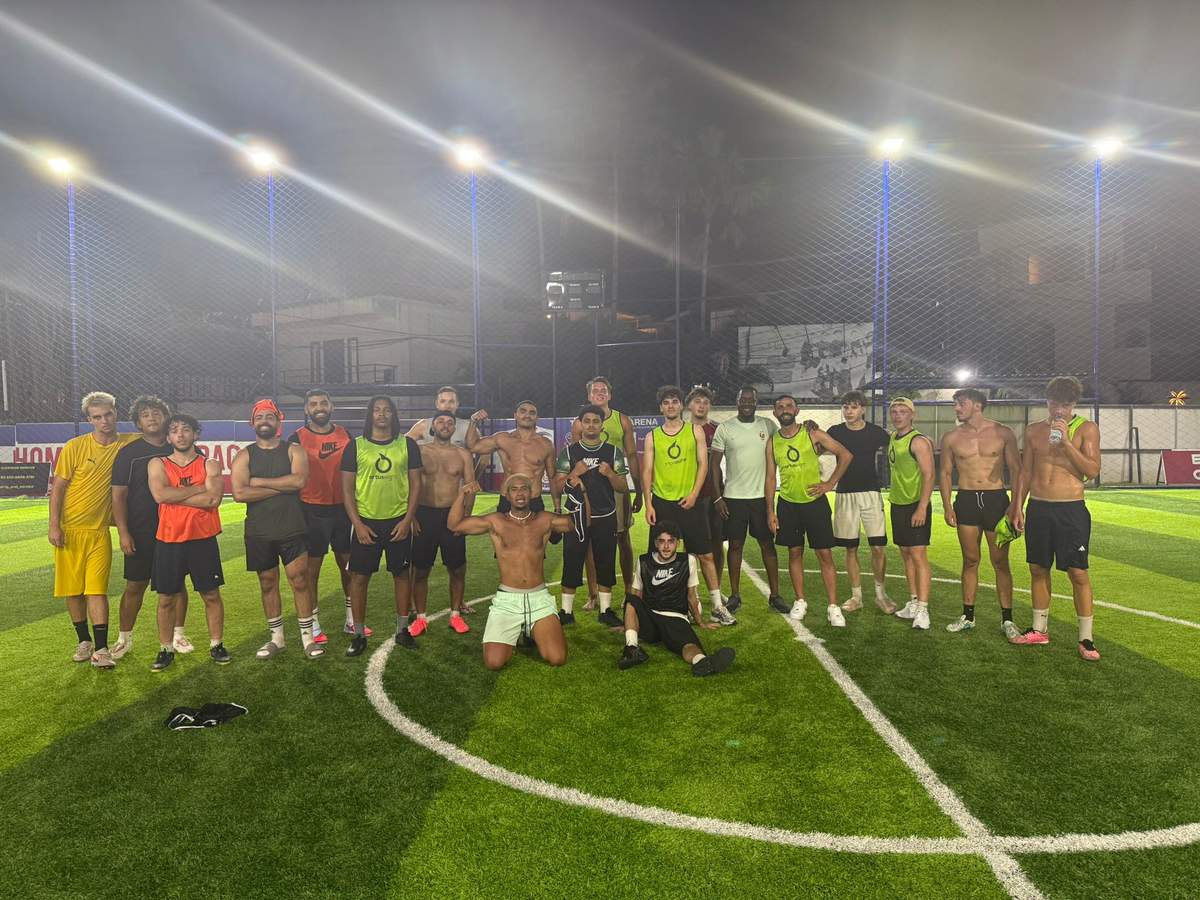
The emptiness hit me on a Tuesday afternoon.
I'd been in Bangkok for a while. I had the apartment, the routine, a growing list of people I'd met at events and through apps. But when 5 p.m. came around and everyone went their separate ways, I'd scroll through my phone and think: I know a lot of people here, but I don't really have friends.
Not acquaintances. Not people I wave to at the coffee shop. Friends. People who'd help me move apartments or sit with me at a hospital if I needed it. That kind of friend is hard to make anywhere. In a foreign country, where everyone is in transit and your social circle resets every few months, it feels almost impossible.
Most expats get there eventually. You arrive excited, but it wears off. The first few weeks are a blur of temples and street food and "where are you from?" conversations that all sound the same. Then you realize you're eating dinner alone again because everyone you know is either a coworker or a fellow traveler passing through next week.
Bali Expat community resources
I spent my first months in Bangkok convinced the problem was me. I wasn't outgoing enough, I wasn't going to the right places, I wasn't trying hard enough. It took a while to realize the problem wasn't effort. Making real friendships takes more than just existing in the same place as other people. It takes a reason to keep showing up.
How football fixed it for me
I'd grown up playing football in France. Not professionally, just the way most French kids do: after school, weekends, summers. It was the thing I always went back to. When I moved to Bangkok, one of the first things I looked for was a pickup game.
I couldn't find one. WhatsApp groups existed, but they were chaos. Half the people would flake, nobody knew which pitch was booked, and you'd show up to find seven players instead of sixteen.
So I started organizing matches myself. I booked a pitch, messaged a few people, and we played. First for friends. Then for friends of friends. Then the group hit 50, then 100, and suddenly I was spending more time coordinating logistics than actually playing. Chasing people who said they'd come and then ghosted. Managing payments. Answering messages about whether tomorrow's game was still on.
That's when I built KickHub, a platform where anyone can book a spot in a pickup football match, pay online, and just show up. Teams get balanced on the spot, and you know before you leave the house that there'll be enough players. The logistics disappear, and you're left with the part that actually matters: playing.
What surprised me was what happened off the pitch.
Why sport works and small talk doesn't
There's something about physical activity that skips the usual awkwardness of meeting people in a foreign country.
Think about how most expat socializing works. You go to a networking event, hold a drink, and try to have conversations with strangers while music plays too loud. You talk about what you do, where you're from, how long you've been here. It's transactional. You exchange Instagram handles and maybe message once before the thread dies.
Now compare that to playing football with someone for an hour. You're running together, passing the ball, celebrating a goal like it actually matters. You're not performing a version of yourself. You're just reacting. In sixty minutes, you learn more about someone than you would over three coffee meetings. You see how they handle losing, whether they pass the ball or try to do everything alone, what makes them laugh when things go wrong.
Football is also universal. Whether you grew up in Argentina, Hong Kong, or Lagos, you know the rules. You don't need to explain anything. I've played with guys who spoke almost no English and it didn't matter. On the pitch, communication is physical. A good pass says more than a conversation.
And then there's the repetition, which is the part most people underestimate. Same time every week. Same place. You start recognizing faces, then names. Then you're grabbing food together after the game. Someone mentions they're looking for an apartment and three people offer to help. Two guys from completely different industries start talking at halftime and end up working on a project together.
I watched this happen dozens of times in Bangkok. A guy shows up alone, doesn't know anyone, plays quietly. Two weeks later he's organizing the post-game dinner. A month later he's introducing new players to the group like he's been there forever. That transition from stranger to regular to friend happens fast when you're sweating next to someone twice a week.
What starts as "I need something to do on Saturday" turns into the social circle you were missing.
2,000 players later
In Bangkok, over 1,500 players from more than 100 countries have joined KickHub since we launched. Teachers, entrepreneurs, digital nomads, embassy staff, Thai locals. People who've been there for six months sitting next to people who've lived there for fifteen years. The mix is part of what makes it work. You end up in conversations you'd never have in your regular circles because your regular circles don't exist yet.
We ran a 120-player tournament last year. It sold out in days. People were competing hard, but also genuinely celebrating each other between games. Teams that lost stuck around to watch the finals. The whole day felt less like a sports event and more like a neighborhood gathering, except the neighborhood spanned fifty countries.
We added a Football Academy with ex-professional coaches for people who want to improve their skills.
The whole thing grew from a WhatsApp group into something that fills the space between arriving somewhere and actually feeling like you belong.
Bringing it to Bali
Canggu was the obvious place to try next.
It's full of the people who made Bangkok work: remote workers, freelancers, entrepreneurs, long-term travelers. People who picked a place because they love it, not because a company transferred them. People with flexible schedules who need structure outside of work. And that last part is the one nobody talks about enough. Freedom is great until you realize your days have no shape and you haven't talked to anyone face-to-face since Tuesday.
I kept hearing the same thing from players who'd been with us in Bangkok and then moved to Bali: "There's nothing like this here." Plenty of surf and yoga. But if you want to run around a pitch with a group of people who show up every week, your options are thin. Bali has football, but most of it is club-based or league-based. Drop-in games where you can just book a spot and show up as a solo player? That barely existed.
So we launched weekly matches in Canggu. The pattern repeated almost immediately. First game, eight players. Most didn't know each other. By the third week, people were arriving early to warm up together, staying late to talk, swapping numbers. A group started getting dinner together after every game.
The same thing that happened in Bangkok was happening again, faster. Bali's nomad community is tighter geographically. Everyone is within a scooter ride. That density accelerates everything.
It's not just football
I'm biased. Football changed my experience as an expat. But the principle works with anything that combines showing up in person, doing it regularly, and keeping the door open for newcomers.
Co-working spaces get one of these right. You're physically there, but the interaction is passive. You sit next to someone for weeks without exchanging more than a nod. People wear headphones. The culture is "don't bother me unless I look available," and nobody ever looks available.
Yoga retreats get another part right. The experience is intense, but it's a one-off. You bond with people over five days of shared vulnerability and green juice, exchange contacts, and then never see them again. The connection was real, but there's no structure to sustain it.
Surf sessions with the same crew, language exchanges, running groups, martial arts classes. These work because you're doing something alongside people, not just being near them. And you're doing it repeatedly, so the relationships have time to go somewhere. The first session is awkward. The fifth is comfortable. The tenth, you're making plans outside the activity.
There's a sociologist named Rebecca Adams who studied how friendships form. She found three conditions: proximity, repeated unplanned interactions, and a setting that lets people let their guard down. Team sports check all three. So does any regular group activity where you're physically engaged and nobody's trying to sell anything.
The nomad friendship problem
Digital nomads have a specific version of this problem that's worth naming.
When you're location-independent, your social life becomes seasonal. You arrive somewhere, build a circle over a few weeks, and then either you leave or they do. The cycle repeats. After a while, you stop investing in relationships because you know the expiration date. You keep conversations shallow because depth takes time you might not have.
Bali makes this worse in some ways because the turnover is constant. Canggu in particular has a revolving door. New faces every week, familiar faces disappearing without warning. The people who stay long-term often end up isolated precisely because they got tired of saying goodbye.
The fix is the same one that worked for me in Bangkok. Find something that runs on a schedule, not on vibes. Something where the group persists even as individual members rotate in and out. The activity is the anchor. You might lose half the group over three months, but the other half stays, and new people keep joining. The community regenerates itself.
That's what I tried to build with KickHub, and it's what I've seen happen with other recurring activities in Bali too. The ones that work are the ones that run rain or shine, same time, same place, every week. The ones that fail are the ones that depend on one person's energy or get scheduled "when enough people are interested."
If you just moved to Bali
You don't need to be athletic. Half the people who show up to a KickHub match haven't touched a ball in years. They came because they needed to be part of something, and football seemed like a low-pressure way to start.
My advice to any nomad who just landed in Canggu or Seminyak: pick one activity and commit to doing it at the same time every week. Block it in your calendar. That consistency is what turns strangers into familiar faces, and familiar faces into friends. It doesn't matter if the activity is football, surfing, pottery, or a weekly dinner at the same warung. What matters is that you show up regularly and other people do too.
Show up alone. It feels weird the first time, but so did everyone else's first time. I've seen hundreds of people walk onto a pitch by themselves looking nervous, and by the end of the game they're laughing with people they met sixty minutes ago. By the second or third session, you're the one welcoming the new person. That shift happens faster than you'd expect.
Give it a month. Real friendships in a new country don't happen in a weekend. They happen over shared experiences that accumulate, week after week, until one day you realize you've got people to call when you need a hand or just want company for dinner. The relationships that last aren't the ones that started with a bang at a party. They're the ones that built slowly through Tuesday evenings and Saturday afternoons doing the same thing in the same place.
The real thing
If you've been in Bali for a few months and the novelty has worn off, if you're tired of surface-level conversations at networking events, you might be surprised where you find your people.
Maybe it's at a co-working space happy hour, or through a random introduction at a coffee shop. For me in Bangkok, it was on a football pitch surrounded by strangers who became actual friends over the following months. Not because we had some magical bonding experience, but because we kept showing up to the same place at the same time, and that was enough. We're building the same thing in Canggu now, and it's already happening again.
If you are moving between Bangkok and Bali, the rainy season guide covers what to expect on the pitch in both cities. For the full breakdown of how pickup works in Bangkok, read the complete expat guide.
Ludovic Lin Yoshimura is the co-founder of KickHub (kickhub.app), a pickup football community for expats and locals in Southeast Asia. Originally from France, he splits his time between Bangkok and Bali.
Games run three times a week in Canggu. Check the schedule and book your spot. If you are moving between Bangkok and Bali, the rainy season guide covers what to expect on the pitch in both cities.
KickHub is available as a free app on the App Store (https://apps.apple.com/app/id6778862411) and at kickhub.app