Playing Football in the Heat: A Southeast Asia Survival Guide
How to play football in tropical heat without burning out. Hydration, pacing, gear, and real strategies from players adapted to Bangkok's 34°C humidity.

You handle playing football in the heat by accepting that everything you know about pacing from back home no longer applies. Your lungs burn faster, your legs feel heavier sooner, and your brain tells you to stop before the first half is over. The guys who last the longest in tropical football aren't necessarily the fittest. They're the ones who figured out how to adapt their game to 34 degrees and 80% humidity.
This is a survival guide for anyone planning to play football in Southeast Asia, specifically Bangkok, where the heat is constant and the humidity makes everything worse. Not generic health advice. Real strategies from players who've made the adjustment.
What the heat actually does to your body
Most people understand that hot weather makes exercise harder. Few understand why it hits so differently in the tropics compared to a warm summer day in London or Berlin.
In Bangkok, the issue is rarely temperature alone. It's the humidity. When the air is saturated with moisture, your sweat can't evaporate efficiently. Evaporation is how your body cools itself, and without it, your core temperature rises faster and stays elevated longer. Your heart rate spikes because your cardiovascular system is working overtime, pushing blood toward the skin for cooling while also feeding your muscles.
On the pitch, that means you gas out in 15 to 20 minutes instead of 45. Your decision making degrades because your brain is competing for the same blood supply your muscles need. You feel dizzy, nauseous, or suddenly exhausted with almost no warning.
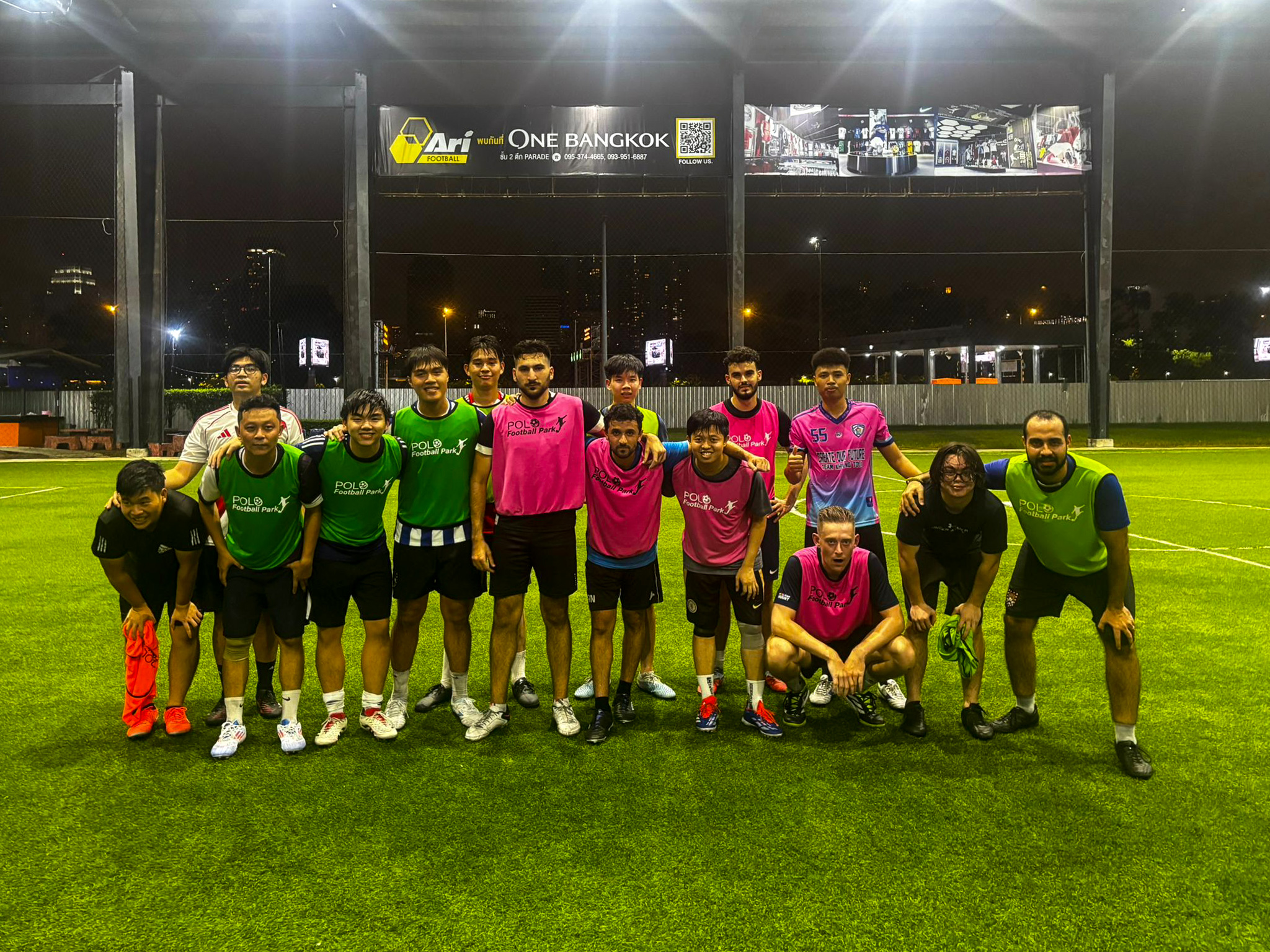
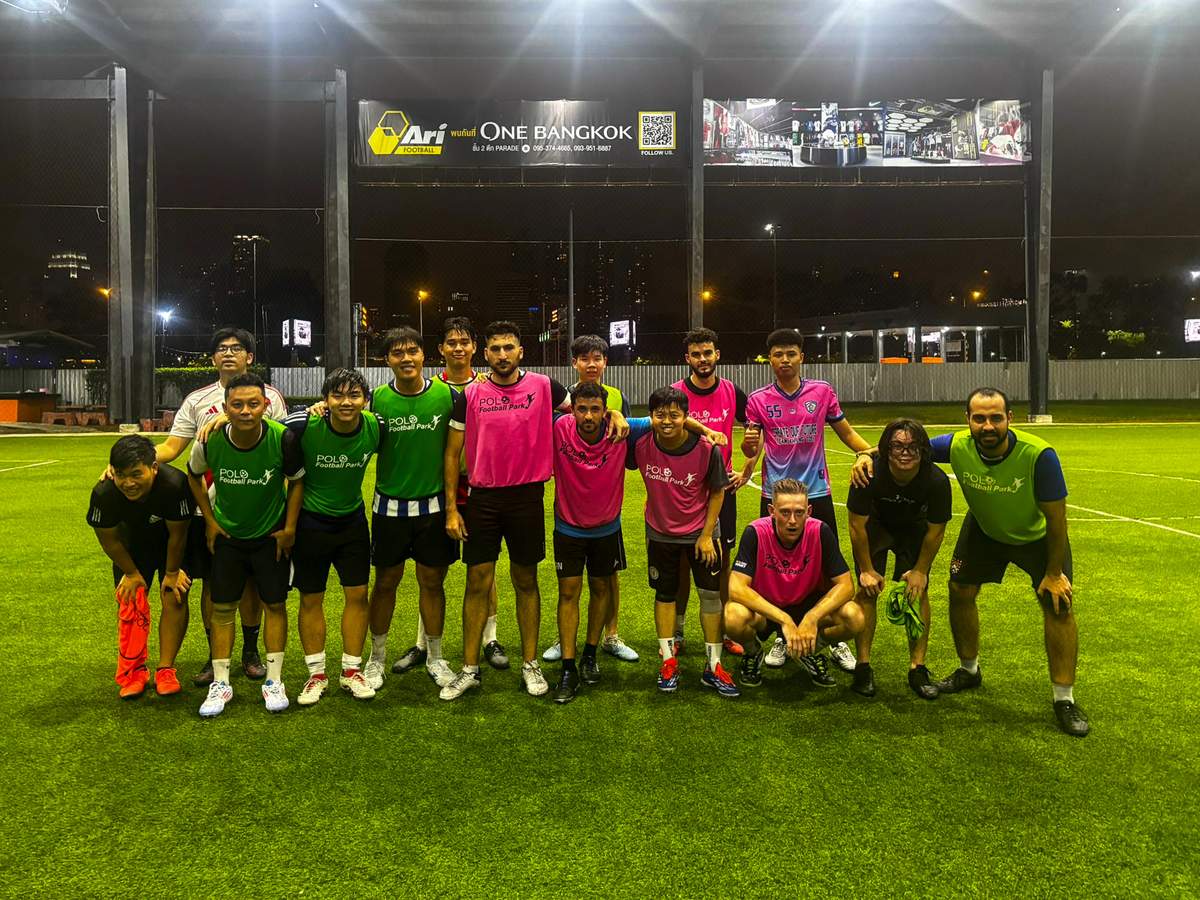
One evening in April 2026, peak hot season, an English guy from London showed up to play his first game at KickHub with a friend. He was on vacation, hadn't done much cardio recently, and stepped onto the pitch at POLO around 7:30 PM. He lasted about three minutes. Not an exaggeration. Three minutes and he walked off, completely overwhelmed by the humidity. He couldn't breathe properly, his body had no answer for the conditions, and he sat on the sideline for the remaining 57 minutes watching everyone else play. He now holds the unofficial record for shortest playing time in the community. Zero acclimatization plus low cardio fitness destroyed him before he could even touch the ball twice.
That's an extreme case, but the underlying problem affects everyone. Even players who've lived in Bangkok for years will tell you their first few weeks were brutal.
Acclimatization is not optional
Your body needs roughly 10 to 14 days to begin adapting to heat stress. During that window, your plasma volume increases, you start sweating more efficiently, and your heart learns to handle cooling and performance at the same time. You can't skip this with willpower.
For your first two weeks:
Play at reduced intensity. Seriously. If you normally play the full 60 minutes at 80% effort, play 30 minutes at 60%. Nobody cares that you're subbing off early. Every regular in Bangkok did the same thing.
Get outside during the day, even just walking. Sitting in air conditioning all day and then stepping into 35 degree heat at 7 PM creates a shock your body can't process smoothly. Thirty to 45 minutes of outdoor exposure daily, even a walk to lunch, makes a difference.
Sleep enough. Heat adaptation happens primarily during recovery. If you're jet lagged and sleeping four hours, your body can't adapt.
The players who struggle longest are the ones who refuse to pace themselves. They sprint the first ten minutes, collapse, and repeat the same mistake the following week.
Hydration strategy that actually works
Drinking water during the game is obvious. What most people miss is what happens in the six hours before kickoff.
WHO guidelines on heat and health
Pre-loading matters. Drink 500ml of water with electrolytes two to three hours before the game. Not 30 minutes before, because that just sits in your stomach. Your muscles need to be hydrated before you start sweating.
During the game, small sips every 10 to 12 minutes. Don't wait until you feel thirsty. By the time thirst registers, you're already 1 to 2% dehydrated, which translates to roughly 10% performance loss.
After the game, replace what you lost. A rough rule: weigh yourself before and after a session. Every kilogram lost equals about one litre of fluid deficit. Most players in Bangkok lose between 1.5 and 2.5 kg per 60 minute game.
Electrolytes aren't marketing nonsense in this climate. You lose sodium, potassium, and magnesium through sweat at a rate that plain water can't replenish. Coconut water from 7-Eleven works. So do electrolyte tablets. Avoid energy drinks with high sugar content, they slow absorption.
Even at evening games starting after 7 PM (the most comfortable window in Bangkok), you sweat more in 60 minutes than you would in a full 90 minute match back in Europe. The humidity doesn't drop much after sunset during hot season. You lose more fluid than your instincts suggest.
Timing your games around the seasons
Bangkok has three distinct seasons, and each one changes what playing feels like.
Hot season (March to May) is the hardest period. Temperatures hit 36 to 38 degrees during the day and barely dip below 30 in the evening. Humidity stays above 70%. Games are slower. Water breaks happen more often. The pace drops, players rotate more frequently, and nobody judges you for taking a breather. POLO during hot season has a different feel from cool season. Everyone's just trying to get through it together.
Monsoon season (May to October) drops the temperature slightly, but humidity goes through the roof. Short, heavy rain bursts are common. They hit fast, dump water for 20 to 40 minutes, and disappear. Most pitches in Bangkok have proper drainage, so a downpour at 6 PM usually means a playable surface by 7:30 PM. Serious storms with lightning mean games get rescheduled. Nobody plays through an electrical storm on an open pitch. The rain itself isn't a problem. Playing in warm rain is actually pleasant. The problem is when the storm doesn't pass and the pitch floods.
Cool season (November to February) is peak football season. Evening temperatures sit in the mid 20s with lower humidity. Games fill faster, the intensity goes up, and players who struggled through hot season suddenly feel like they have new legs. If you're planning a trip specifically to play, this window gives you the closest experience to European conditions. Still warmer than most people expect, but manageable from the first session.
Gear that actually matters
Cotton shirts are a mistake. They absorb sweat, get heavy, and stick to your skin. Synthetic fabrics (polyester, nylon blends) wick moisture away and dry faster. You'll feel the difference within ten minutes.
Light colours reflect more heat than dark ones. A white or light grey shirt absorbs noticeably less radiant heat than a black one.
Most Bangkok pitches are artificial turf. Standard football boots with studs work but can be heavier than necessary. Turf trainers (TF soles) are lighter and give adequate grip. Less weight on your feet means less energy spent, and that compounds over 60 minutes in heat.
A cooling towel on the sideline helps during substitution breaks. Soak it in cold water, drape it on your neck. It cools the blood flowing to your brain and brings your perceived exertion down.
Some venues in Bangkok have overhead fans on the sidelines. They won't change your life, but they help during breaks. Indoor futsal courts with air conditioning exist on days when the heat is genuinely dangerous (heat index above 45, which happens several times each hot season).
Recognizing heat exhaustion before it becomes heat stroke
Heat exhaustion doesn't always announce itself clearly. The early signs are subtle and easy to dismiss as normal fatigue.
Watch for dizziness that doesn't pass after stopping, nausea, a headache that develops suddenly mid game, confusion or unusual irritability, skin that feels hot but has stopped sweating, or muscle cramps in areas you don't normally cramp.
If you notice these in yourself, stop immediately. Not "after this attack." Now. Sit in shade, pour water on your head and neck, drink slowly, and don't return to the pitch that evening.
If you notice them in another player, pull them off. People experiencing heat exhaustion often don't recognize it themselves because the cognitive impairment is part of the condition.
The line between heat exhaustion and heat stroke is thin, and the transition can happen quickly. Heat stroke (core temperature above 40 degrees, altered consciousness, seizures) is a medical emergency. Call an ambulance. Don't try to handle it yourself.
In three years of community football in Bangkok with over 1,500 active players, serious heat incidents are rare. They happen almost exclusively to newcomers who overestimate their fitness and underestimate the conditions.
Adjusting your playing style
The best tropical football players don't look like the best players you see in Europe. The sprint-and-recover approach that works at 15 degrees falls apart at 34.
Fewer sprints, better positioning. Read the play earlier so you can walk into space instead of chasing balls you should have anticipated. In Bangkok, that's not laziness. That's smart football.
Pass earlier. Holding the ball and dribbling past players costs more energy than a quick one-two. The technical players who move the ball fast tend to last the full 60 minutes. The dribblers who try to beat three players fade by minute 30.
Communicate more. "Turn" and "man on" save your teammates from having to look over their shoulder.
Accept that you'll have bad patches. Around minute 25 to 35, most players hit a wall where performance drops noticeably. Push through those five minutes gently (don't stop, but reduce intensity) and you often find a second wind as your body recalibrates.
Fuel and recovery: what to eat around a game
What you eat before and after a session matters more in heat because you're burning through glycogen and electrolytes faster than in temperate climates.
Two to three hours before kickoff, eat a meal that combines carbohydrates with moderate protein. Rice with chicken, a pasta dish, a sandwich with actual substance. Nothing heavy or greasy. Your stomach needs to be mostly done digesting by the time you step on the pitch. Eating too close to game time in Bangkok heat is a recipe for nausea.
Skip the pre-game coffee if you can. Caffeine is a mild diuretic, and in a climate where dehydration is your main problem, starting the session already down on fluids doesn't help.
After the game, eat within 90 minutes. Your muscles need glycogen and your body needs sodium. Thai food actually works well for this: a bowl of khao pad (fried rice) or pad kra pao covers carbs, salt, and protein in one meal. Many players grab food from the vendors near POLO or the restaurants along Sathon after evening sessions. Recovery meals don't need to be complicated. They just need to happen.
Avoid alcohol immediately after playing. You're already dehydrated and your core temperature is still elevated. A beer feels deserved but delays recovery by hours. Wait at least 60 to 90 minutes and rehydrate with water first.
Preventing common injuries in tropical conditions
Heat changes injury patterns. The two most common issues in Bangkok pickup football aren't tears or breaks. They're cramps and rolled ankles on wet turf.
Cramps happen when your electrolyte balance collapses under heat stress. Calves and hamstrings go first. If you cramp regularly during games, the fix is almost never "stretch more." It's hydrate better and supplement magnesium. A banana before the game helps with potassium. Electrolyte tablets in your water bottle handle the sodium.
Ankle rolls spike during monsoon season when artificial turf gets slick after rain. The surface looks fine but has less grip than when it's dry. Wear turf shoes with good ankle support rather than low-cut boots during wet months. Warm up your ankles specifically, 20 circles each direction before stepping on the pitch.
Stretch after the game, not before. Pre-game static stretching on cold muscles doesn't prevent injuries and can reduce power output. A dynamic warmup (high knees, lateral shuffles, gentle jogging) for 5 minutes does more. Save the hamstring and quad stretches for after the session when your muscles are warm.
If your lower back tightens during the game (common in humidity because players unconsciously tense their core), take 30 seconds to hang from a goal crossbar during a break. It decompresses the spine and releases the tension faster than any stretch.
The reality of playing football in Bangkok long term
After a month, the heat stops being the main thing you think about during a game. After three months, you forget what it felt like to struggle. You adapt, and you start playing at 85 to 90% of your temperate climate level without thinking about it.
The 2,000+ players from over 70 nationalities who play regularly in Bangkok all went through this. The community runs games most evenings across venues in Lumphini, Sathon, and On Nut. New players show up every week, go through the same shock, and come out the other side within a few weeks.
The English tourist who lasted three minutes? His friend played the full game. The difference wasn't talent or even fitness, necessarily. The friend had done a few outdoor runs earlier in the trip. That small head start on acclimatization made the difference between 60 minutes of football and 3 minutes of humiliation.
Playing football in the heat isn't comfortable. It won't ever feel like a crisp autumn evening in Manchester. But it becomes normal. And once it's normal, you realize the heat gave you something. Better fitness. Sharper reads when you're exhausted. You can show up anywhere in the world and not worry about conditions.
Heat management matters even more on the islands, where most football happens after dark. If you are in Phuket, pickup football in Phuket explains why the whole island plays in the evening.
Ready to test yourself? Browse tonight's games and show up 10 minutes early with water.